Turnkey 300 kg/h Semi-Automated French Fries Production Line
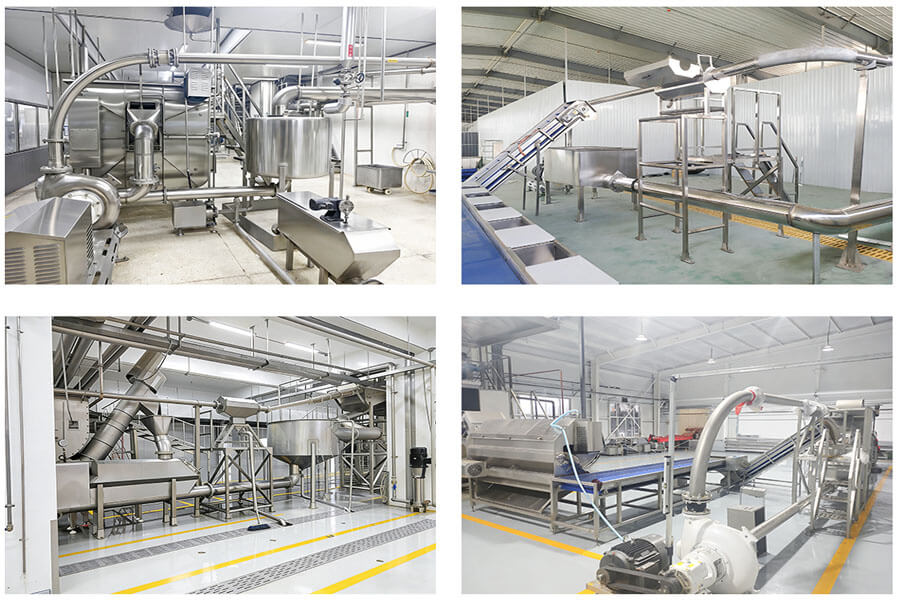
The turnkey 300 kg/h semi-automated French fries production line is an optimized, budget-friendly industrial solution designed for small-to-medium snack manufacturers, commercial kitchens, and agricultural startups scaling up production. Engineered to deliver an exact output of 300 kg/h of premium fresh or frozen French fries, this production line utilizes high-efficiency batch processing machinery—including batch blanchers, centrifugal de-waterers, basket-lift batch fryers, and centrifugal de-oilers—instead of large, continuous conveyor systems. This modular batch configuration drastically reduces initial capital expenditure (CapEx) and minimizes factory footprint while giving operators precise control over processing times, temperature settings, and product quality parameters for every single batch.
Complete Technical Specifications
By utilizing standalone batch units integrated into a coordinated workflow, this 300 kg/h line offers exceptional flexibility and ease of maintenance.
Technical Parameter
- Production Capacity: 300 kg/h finished French fries (fresh or frozen)
- Processing Configuration: Semi-automated batch processing
- Core Machinery Included: Washing/Peeling, Cutting, Batch Blancher, Centrifugal De-waterer, Batch Fryer, Centrifugal De-oiler, Blast Freezer.
- Primary Material: Food-grade SUS304 Stainless Steel
- Heating Sources Available: Electricity, Liquefied Natural Gas (LNG), or LPG
- Power Requirement: ~45 kW – 60 kW (depending on thermal configuration)
- Required Shop Floor Area: Approximately 80–120 square meters
- Compliance Standards: Full CE, ISO9001, and HACCP sanitary compliance


Semi-Automatic Batch Frozen French Fries Production Line
Key labor-intensive and safety-sensitive tasks are automated. The Semi-Automatic Batch-Type Frozen French Fries Production Line is a medium-capacity potato processing solution designed for producing par-fried and frozen French fries at a finished output of 100 kg/h to 300 kg/h. It bridges the gap between manual batch processing and continuous industrial production by introducing automatic feeding, automatic discharging, automatic basket lifting, and automatic centrifugal dewatering and de-oiling. It is an efficient middle-tier french fries production solution: higher output than a manual french fries line, lower investment, and greater flexibility than a fully automatic continuous frozen french fries line.


Small Scale Frozen French Fries Production Line
The Manual Batch-Type Frozen French Fries Production Line is a compact, entry-level potato processing solution for producing par-fried and frozen French fries at an output capacity of approximately 100 kg/h of finished product. Designed for startups, small french fries factories, central kitchens, agricultural processing projects, restaurant supply businesses, and regional food brands, this batch French fries line combines essential french fries machines with a practical manual operating method. The blancher and fryer can be customized with electric, natural gas, or LPG heating to match local utility conditions and operating cost requirements.
Core Advantages of the Batch French Fries Line Configuration
- Unmatched Capital Savings: By eliminating expensive continuous mesh-belt conveyors and continuous air-knife lines, this semi-automatic batch configuration lowers equipment procurement costs by up to 50% compared to fully automated lines of identical capacity.
- Flexible Operational Control: Because each step operates as an independent batch, plant managers can easily adjust blanching times or frying temperatures on the fly to accommodate different potato varieties or seasonal moisture variations.
- Minimal Maintenance & Easy Sanitation: Standalone batch machines have fewer complex moving parts than continuous lines. Constructed entirely of SUS304 stainless steel, each unit can be quickly cleaned, washed down, and serviced independently, reducing factory downtime.
CONTACT US FOR A FREE CONSULTATION
Batch-by-Batch Processing Workflow & Machinery Composition
Unlike high-volume continuous french fries lines that rely on automated air knives and belt fryers, this semi-automatic system achieves its 300 kg/h throughput using specialized, heavy-duty batch french fries machines:
1. Washing & Peeling ➔ 2. Precision Cutting ➔ 3. Batch Blanching ➔ 4. Centrifugal De-watering ➔ 5. Batch Frying ➔ 6. Centrifugal De-oiling ➔ 7. Blast Freezing ➔ 8. Packaging

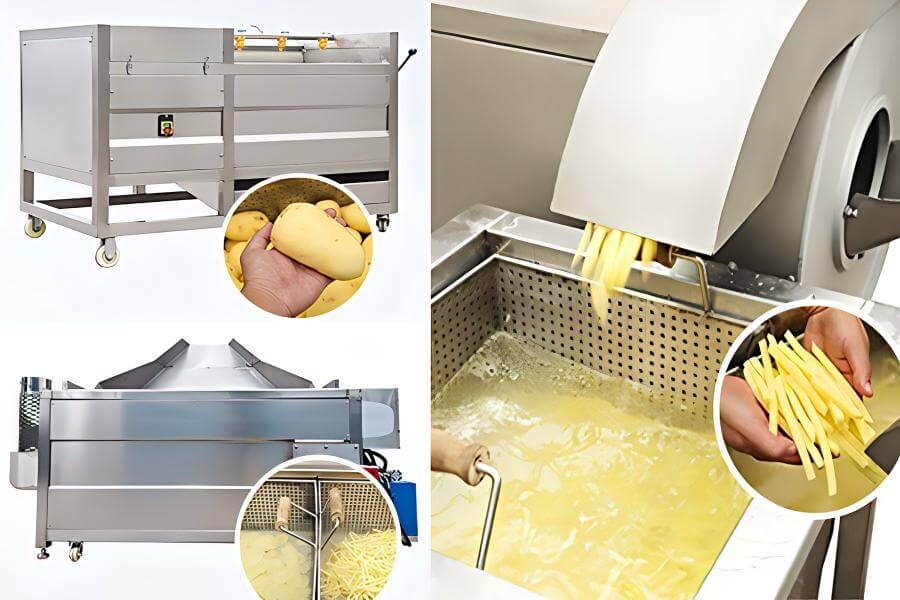
1. Large-Capacity Brush Roller Washing & Peeling Machine
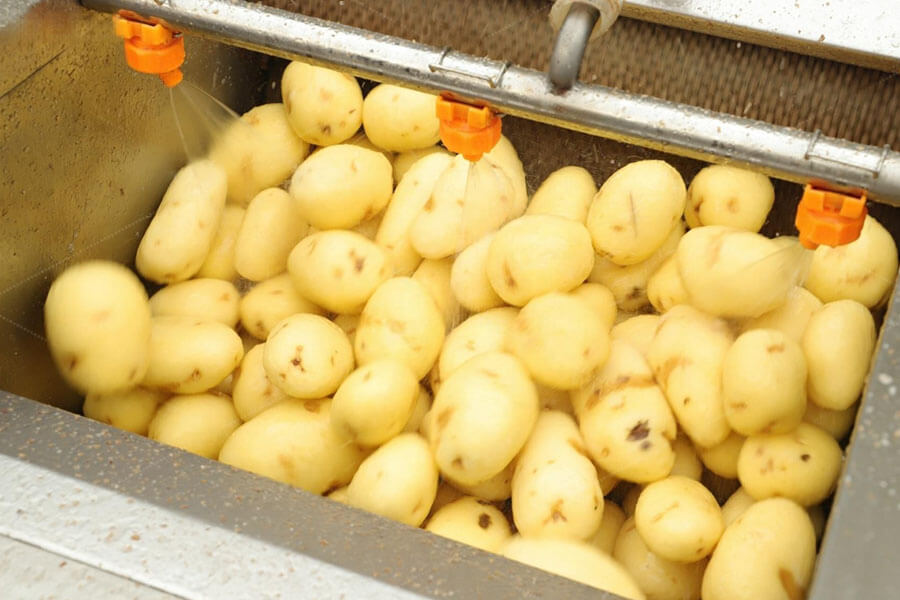
Raw potatoes are fed into a continuous or large-batch brush-peeling unit. Utilizing nine wear-resistant nylon rollers paired with a continuous pressurized water spray, it strips away soil and skins efficiently. The non-destructive friction design keeps potato flesh waste under 5%, maximizing raw material yield.
Peeled potatoes transition to a high-speed centrifugal cutter. It slices raw potatoes into uniform strips with perfectly smooth faces. Standard cutting sizes range from 6mm to 12mm (with customizable blades for potato wedges or crinkle cuts). Smooth cutting surfaces are vital because they minimize starch loss and reduce oil absorption during frying.

The potato strips are transferred into the perforated stainless steel baskets of the batch blanching machine. Hot water immersion (75°C–85°C) deactivates browning enzymes, washes away excess surface starch to prevent clumping, and softens the internal starch matrix. Once the timer finishes, the pneumatic or manual lift system automatically hoists the baskets out to drain.

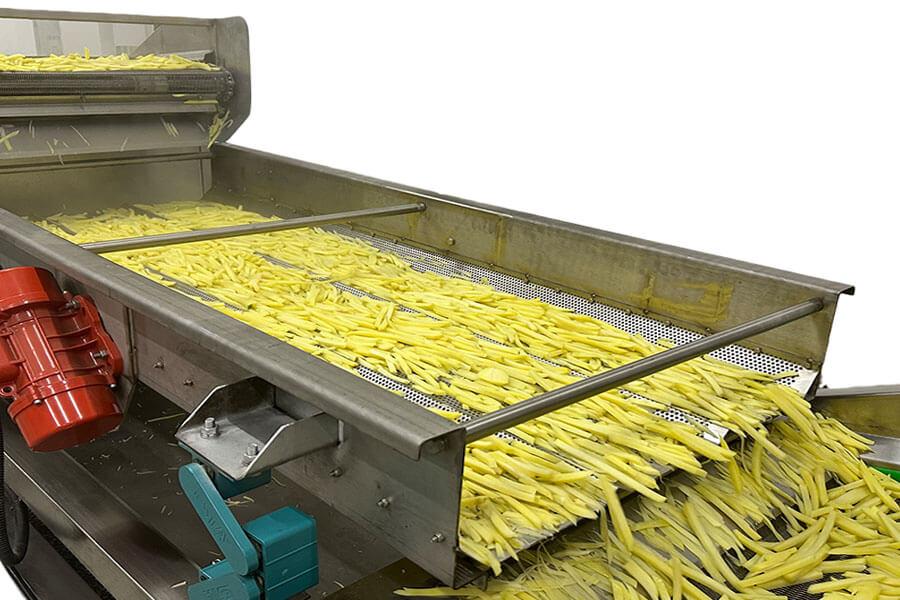
Instead of long air-drying conveyor belts, this line uses a compact centrifugal spinner. The blanched potato strips are placed inside a high-speed rotating basket. Centrifugal force instantly forces surface moisture off the fries without damaging their structural integrity. Removing surface water at this stage prevents oil splattering, slows down oil hydrolysis, and cuts down frying energy consumption.


5. Advanced Batch Frying Machine (With Oil-Water Separation)
The dried fries are immersed in a temperature-controlled batch fryer (operating at 170°C–180°C). This unit features advanced oil-water separation technology: sediment and debris sink into a lower water layer so they don’t burn, keeping the upper frying oil clean. This system extends oil life, reduces smoke, and ensures each batch achieves a consistent golden crust.

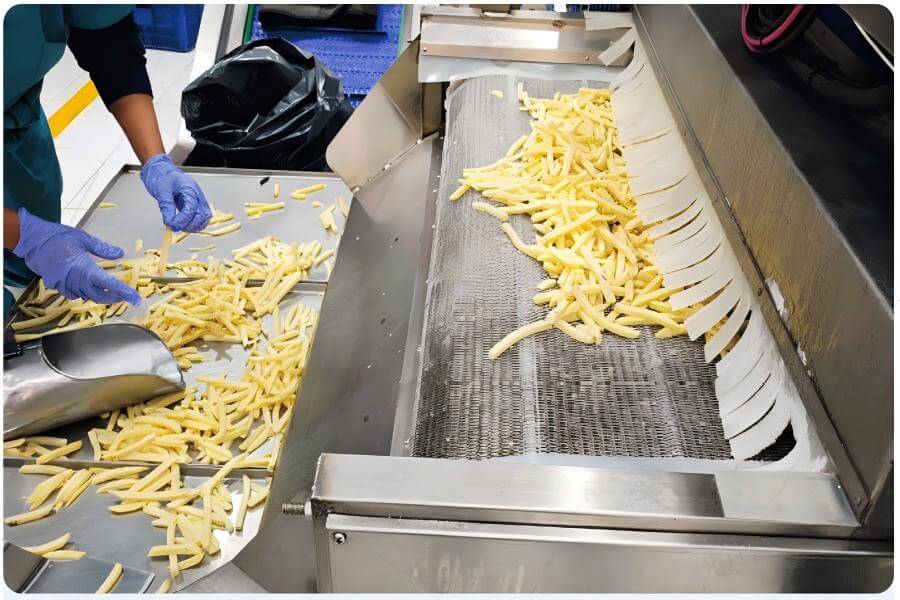
Immediately after frying, the hot French fries are transferred to the centrifugal de-oiler. Rapid spinning removes excess surface oil, improving texture and lowering total fat content. Finally, the fries are moved to a cooling table where high-velocity ambient fans drop internal temperatures, preparing them for immediate retail packaging or individual quick freezing (IQF).

7. Heavy-Duty Commercial Quick Freezer (Batch Shock Freezer)
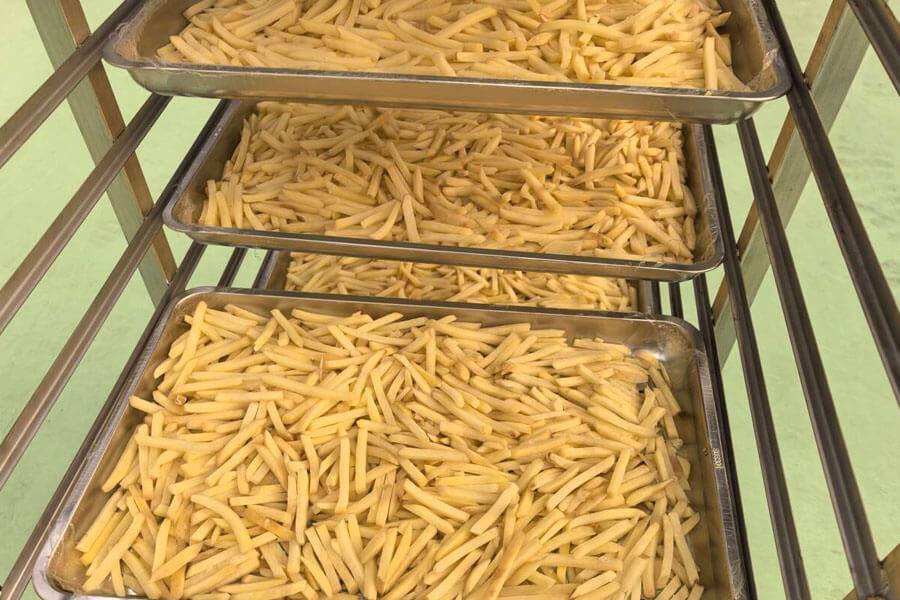
The pre-cooled French fries are spread onto stainless steel trays and placed into the batch quick-freezing cabinet (or a compact fluidized bed freezer). Utilizing high-efficiency compressors, the temperature drops rapidly to -35°C to -40°C within 20–30 minutes, bringing the core temperature of the fries down to -18°C. This ultra-fast freezing locks in the moisture, prevents large ice crystals from damaging the potato cells, and ensures the fries remain individual (IQF) and do not clump together.

The frozen fries are fed into a semi-automatic packaging unit equipped with an electronic multi-head weigher for extreme precision (+/- 1g accuracy). The machine automatically weighs the target mass (e.g., 500g, 1kg, 2.5kg bags) and dispenses it into a pre-formed pouch held by the operator. A heavy-duty pneumatic heat sealer then seals the bag, complete with a date coder for batch traceability.